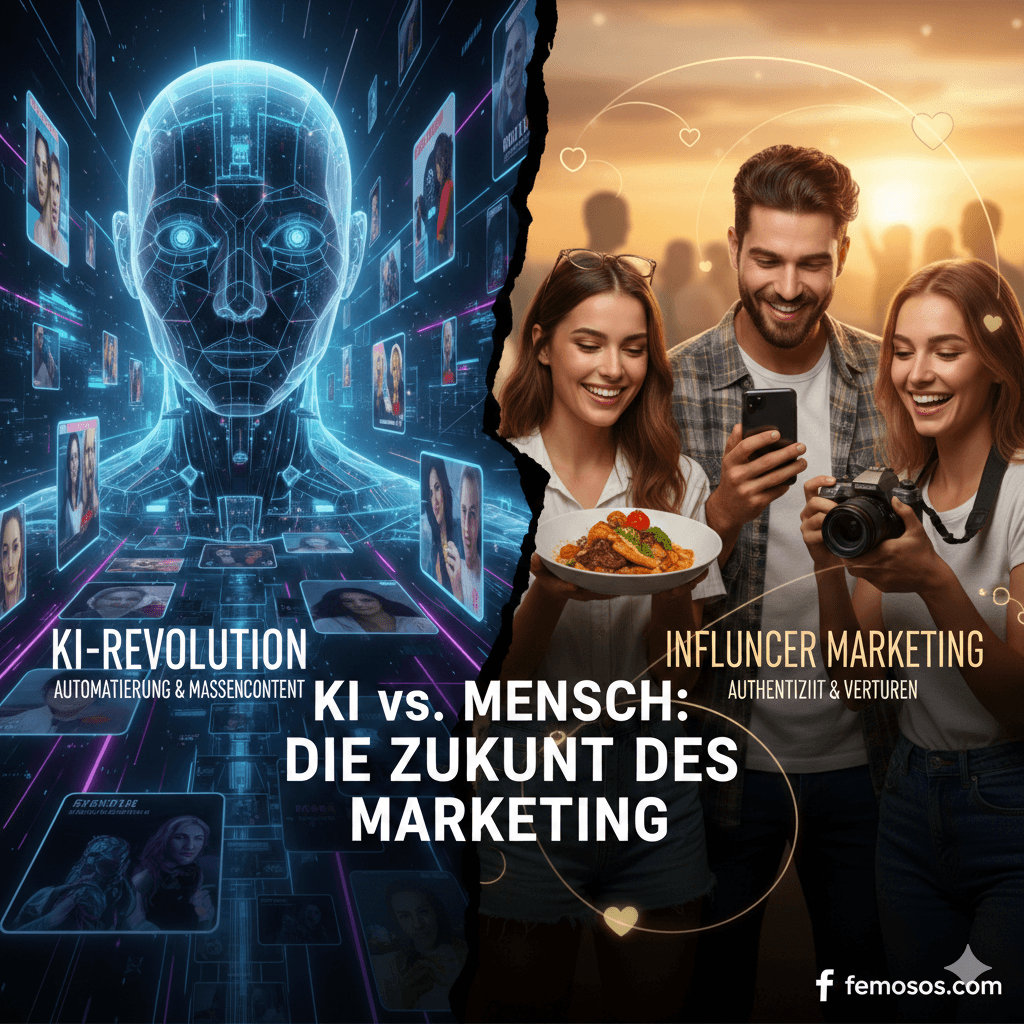

The rapid evolution of Artificial Intelligence (AI) is transforming the marketing landscape at an unprecedented pace. What once took months and swallowed six- to seven-figure budgets namely the production of high-quality commercial videos and creatives can now be generated with a single prompt within seconds. However, this efficiency comes with a downside: creatives are becoming a commodity, and the once-crucial element of differentiation is becoming a major challenge. In this new era, where the lines between reality and AI-generated content blur, consumer trust is dropping, and attention spans are suffering under a flood of interchangeable advertising. The solution? Influencer Marketing: a field deeply rooted in human psychology that provides the decisive anchor of trust in an increasingly digitized world.
The AI Revolution and its Flip Side in Marketing
AI tools enable marketing teams to produce content at a speed and volume never seen before. From personalized ads to complete video campaigns, generative AI makes it possible to create assets that were unthinkable just a short while ago. Yet, this democratization of content production leads to market oversaturation. When everyone has access to the same powerful tools, standing out from the competition becomes increasingly difficult. The uniqueness and "wow factor" of creatives are diminishing; they are turning into interchangeable goods or commodities.
The consequences of the AI flood:
- Declining Trust: Consumers are increasingly uncertain about what is real and what is not. AI-generated faces, voices, and scenarios raise the question of whom or what to believe anymore. This skepticism undermines trust in brand messaging.
- Attention Deficit: The sheer volume of content users face daily (often referred to as the "AI slope" or "content trash") leads to overstimulation and a numbing effect toward advertising. Attention spans are shrinking, making it harder than ever to convey a brand's message.
- Loss of Differentiation: When all creatives look and feel similar, brands lose the opportunity to build a unique identity and anchor themselves in the consumer's memory.
Influencer Marketing as the Human Counterpoint
Amidst this development, influencer marketing is proving to be a powerful counter-balance. It offers what AI-generated content struggles to replicate: authenticity, trust, and human connection. We live in a world where people switch brands simply because their favorite influencer does. The success of influencer marketing is deeply rooted in human psychology, particularly in the concept of parasocial relationships.
Parasocial relationships describe the feeling of a one-sided, intimate connection with a person we only know through media. Influencers fill this role perfectly. They are not anonymous faces in an ad; they are trusted figures who have built their community over years. They share glimpses into their lives, their opinions, and their experiences, creating a strong emotional bond. This bond is the foundation upon which successful influencer marketing is built in the AI era.
Three Key Levers of Influencer Marketing in the AI Age:
- Trust: Influencers use the products themselves - they eat them, wear them, and integrate them into their daily lives. Their recommendation feels like a tip from a friend, not a paid advertisement. This trust is invaluable in an age of AI-generated content.
- Application over Advertising: Instead of just presenting a product, influencers show how it is used in real life - whether in recipes, tutorials, or as part of a routine. Especially in the food sector, influencers don't just sell the product; they sell the feeling and the experience surrounding it. They make it tangible and relevant.
- Repetition and Long-term Presence: Many products, particularly in the FMCG and food space, require multiple "touchpoints" before a buying decision is made. Influencers enable a long-term and consistent presence in their followers' feeds, allowing brand messages to be perceived organically and repeatedly without feeling intrusive.
femosos.com: Harmonizing Trust and Efficiency
femosos.com understands the importance of this human component in marketing. While AI agents automate operational tasks and predictive analytics maximize ROI, the core of success lies in selecting the right influencers who can build genuine trust. femosos.com helps brands find and nurture these authentic connections by combining data-driven decisions with the irreplaceable value of human credibility. This allows brands to dominate their niche by relying on real relationships that stand out in the flood of AI-generated content.
Conclusion
AI may revolutionize the production of creatives, but it cannot replace the human connection and trust that influencers build. In a world where the credibility of content is increasingly questioned, influencers are becoming the most important anchors of trust for brands. Those who want to differentiate themselves and achieve sustainable success in the future must leverage the strengths of AI for efficiency while simultaneously investing in the authenticity and relevance of influencer marketing. Because in the end, people buy from people they trust.