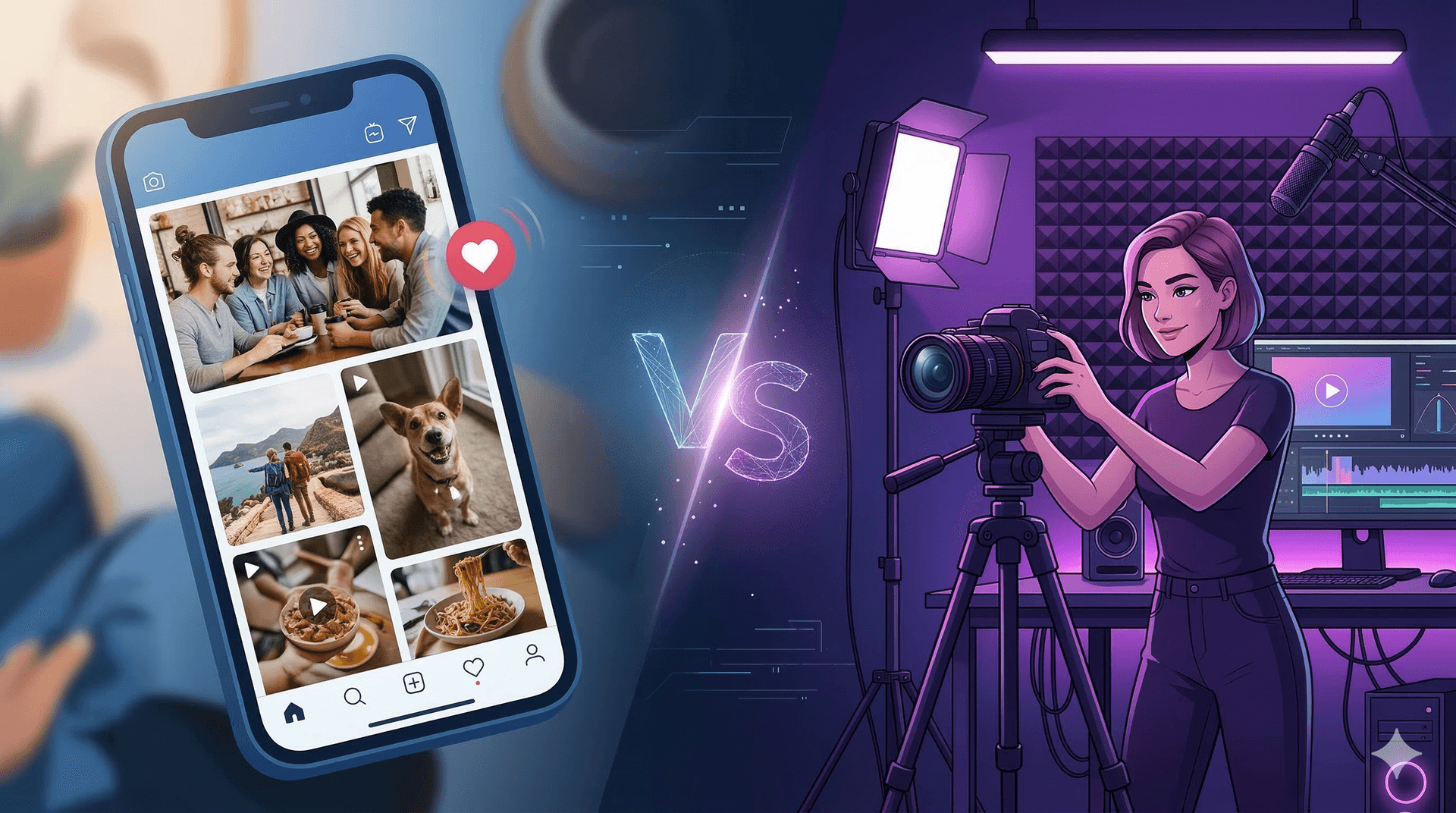
Defining the Terms
User-Generated Content (UGC)
Content created by your actual customers/users about your brand.
Examples:
- Customer reviews and testimonials
- Photos/videos of customers using your product
- Social media posts from customers
- Hashtag campaigns where customers share content
- Case studies and success stories
- Q&A and community forums
Influencer Marketing
Partnerships with established creators who promote your brand to their audience.
Examples:
- Sponsored Instagram posts
- TikTok partnerships
- YouTube product reviews
- Affiliate promotions
- Brand ambassadorships
- Affiliate marketing programs
Key Differences
Authenticity
UGC:
- Ultimate authenticity – real customers
- No disclosure needed (customer choice)
- Inherent trust because it's not paid
- Audience perceives as genuine
Influencer:
- Paid/sponsored relationship
- Requires #ad or #sponsored disclosure
- Audience knows it's promotional
- Authenticity depends on influencer credibility
Cost
UGC:
- Often free (organic customer posts)
- Might offer small incentives
- Minimal production cost
- Typical spend: €0-2,000 per campaign
Influencer:
- Significant cost per creator
- Professional production quality
- Higher per-post investment
- Typical spend: €500-50,000+ per creator
Reach
UGC:
- Limited to customer base
- Organic social sharing only
- Slow, word-of-mouth growth
- Smaller initial reach
Influencer:
- Access to creator's large audience
- Immediate exposure
- Predictable reach
- Much larger initial impact
Control
UGC:
- Limited control over content
- You can't dictate messages
- Have to accept variations
- Authenticity comes from lack of control
Influencer:
- Contract specifies deliverables
- Approval process for content
- Control over key messages
- More predictable output
Scalability
UGC:
- Hard to scale organically
- Requires growing customer base
- Takes time to accumulate
- Limited by customer size
Influencer:
- Highly scalable
- Can launch multiple campaigns
- Repeatable process
- Quick campaign execution
Detailed Comparison
| Factor | UGC | Influencer |
|---|---|---|
| Authenticity | Very High | Medium-High |
| Cost | Low | High |
| Reach | Small-Medium | Large |
| Speed | Slow | Fast |
| Trust | Very High | Medium |
| Control | Low | High |
| Scalability | Low | High |
| Production Quality | Variable | Professional |
| Effort | Low | High |
| ROI Timeline | Long | Medium |
| Best For | Trust building | Growth/awareness |
| Disclosure | Optional | Required |
UGC Advantages
1. Authenticity
- Real customers
- Genuine experiences
- No perceived bias
- Higher trust from audience
2. Cost-Effective
- Free or low-cost
- No influencer fees
- Minimal production costs
- Great ROI on investment
3. Trust and Credibility
- Peer recommendations carry weight
- 92% of consumers trust peer recommendations
- Reduces skepticism about brand claims
- Social proof is powerful
4. Diverse Perspectives
- Multiple customer viewpoints
- Different use cases
- Varied audiences represented
- More inclusive content
5. Community Building
- Engages your customer base
- Creates sense of belonging
- Strengthens customer loyalty
- Turns customers into advocates
UGC Disadvantages
1. Limited Reach
- Only reaches current customer audience
- Slow organic growth
- No paid reach multiplier
- Hard to scale impact
2. Inconsistent Quality
- Variable production quality
- Depends on customer creativity
- Not professional polish
- Can be rough or unpolished
3. Unpredictable Results
- Can't guarantee participation
- Output varies significantly
- No control over messaging
- Results are harder to predict
4. Time to Accumulate
- Takes time to get enough content
- Requires customer base
- Slow to launch campaigns
- Long-tail approach
5. Limited Control
- Can't dictate content
- Must accept variations
- Hard to align with specific campaigns
- Messy coordination
Influencer Marketing Advantages
1. Immediate Reach
- Access to large, established audiences
- Instant visibility
- Predictable reach metrics
- Fast brand awareness
2. Professional Quality
- Polished content creation
- Professional production
- High-quality visuals/video
- Brand-aligned aesthetics
3. Targeted Reach
- Choose creators with your target audience
- Reach specific demographics
- Focus on relevant niches
- Precision targeting
4. Scalability
- Launch multiple campaigns quickly
- Coordinate multiple influencers
- Repeatable process
- Can grow rapidly
5. Expertise and Authority
- Creators have expertise in their niche
- Their endorsement carries weight
- Audience trusts their opinion
- Positions your brand as credible
6. Content Creation
- You get professional content
- Can repurpose across channels
- Media-ready assets
- Saves your production costs
Influencer Marketing Disadvantages
1. Cost
- Significant per-post expense
- Multiple creators add up quickly
- No guaranteed ROI
- High budget requirement
2. Authenticity Questions
- Audiences know it's sponsored
- Requires #ad disclosure
- Less personal recommendation
- Can feel inauthentic
3. Risk
- Influencer scandal affects brand
- No control over creator behavior
- Audience alienation risk
- Brand safety concerns
4. Variable ROI
- Results vary significantly
- Not all influencers perform equally
- Hard to predict outcomes
- Can be wasted budget
5. Audience Mismatch
- Creator's audience may not be your audience
- Follower quality questions
- Engagement-to-reach mismatch
- Efficiency challenges
When to Use Each Strategy
Use UGC When:
- Budget is limited (€500-2,000)
- You want authentic recommendations
- You have established customer base
- Long-term brand building matters
- Building community is priority
- Trust is your main goal
- You can wait for results
Use Influencer Marketing When:
- Need immediate growth/awareness
- Budget allows (€5,000+)
- Targeting new audiences
- Need professional content quality
- Launch needs speed
- Want predictable reach
- Scaling fast is priority
Use Both When:
- You have budget for both
- Want authenticity + reach
- Building short and long-term
- Have different campaign goals
- Want to hedge your bets
The Best Strategy: Hybrid Approach
Winning formula:
- Influencers for reach, awareness, growth
- UGC for trust, authenticity, community
Example Campaign:
- Month 1-2: Influencer partnerships for awareness5-10 influencers reaching new audienceProfessional content and immediate reachDrives brand awareness
- Month 2-3: Customer UGC campaignIncentivize customers to share experiencesBuild authentic community proofGenerate customer testimonialsCreate social proof for prospects
- Month 4+: CombinationRepurpose top UGC contentUse customer testimonials in paid adsFeature customers as micro-influencersBuild long-term community
Result: Reach + authenticity + trust + scalability
Cost Comparison Example
Budget: €10,000
UGC-Only Approach
- €2,000 in incentives for customer content
- €1,000 in promotion
- €500 in tools/platform
- €6,500 left for expansion
- Result: Some authentic content, limited reach
Influencer-Only Approach
- €10,000 split between 2-5 influencers
- Higher reach and awareness
- Professional content
- One-time impact
- Result: Good reach, authenticity concerns
Hybrid Approach
- €6,000 on 3-4 influencers (reach + content)
- €3,000 on customer UGC campaign (authenticity)
- €1,000 on paid promotion
- Result: Reach + authenticity + control + community
Measuring Success
UGC Metrics
- Number of submissions
- Engagement on UGC content
- Customer sentiment
- Share of voice
- Community growth
- Long-term brand perception
Influencer Metrics
- Reach and impressions
- Engagement rate
- Click-throughs and traffic
- Conversions/sales
- Cost per acquisition
- Brand awareness lift
Combined Metrics
- Total reach and awareness
- Blend of authentic + professional
- Balanced cost per outcome
- Customer lifetime value
- Brand perception shift
- Community strength
The Psychology
UGC Appeals to:
- Trust and authenticity
- Peer recommendations
- Social proof
- Relatability
- Real experiences
Influencer Marketing Appeals to:
- Aspirational lifestyle
- Expert recommendations
- Professional quality
- New discoveries
- Validation from authorities
Best brands use both to appeal to different psychological drivers.
Real-World Examples
Nike
- UGC: Customer photos with #JustDoIt
- Influencers: Athlete partnerships
- Combined: Authentic + aspirational
Airbnb
- UGC: Guest reviews and photos
- Influencers: Travel creators
- Combined: Real reviews + aspirational travel
Glossier
- UGC: Customer reviews and photos
- Influencers: Beauty influencers
- Combined: Community feel + professional content
Future Trends
2026+ Trends:
- More emphasis on authenticity
- UGC becoming more important
- Influencer quality over quantity
- Hybrid strategies dominating
- AI-powered content (both UGC and influencer)
- Creator compensation models evolving
- Community-driven growth
Conclusion
The Answer: It's not either/or, it's both.
The most successful brands:
- Use influencers for reach and awareness
- Use UGC for authenticity and trust
- Combine both for maximum impact
- Allocate budget strategically
- Measure results systematically
- Refine based on data
In 2026, the best marketing combines the professional reach of influencers with the authentic voice of real customers.
About femosos: femosos helps you identify the right influencers for your campaigns. For UGC, we help analyze customer content and customer advocates. For best results, use both strategies together.